
NYF DUBLIN 2027 COMING SOON
Stay tuned for more exciting updates and get ready to create lasting memories at New Year's Festival Dublin.
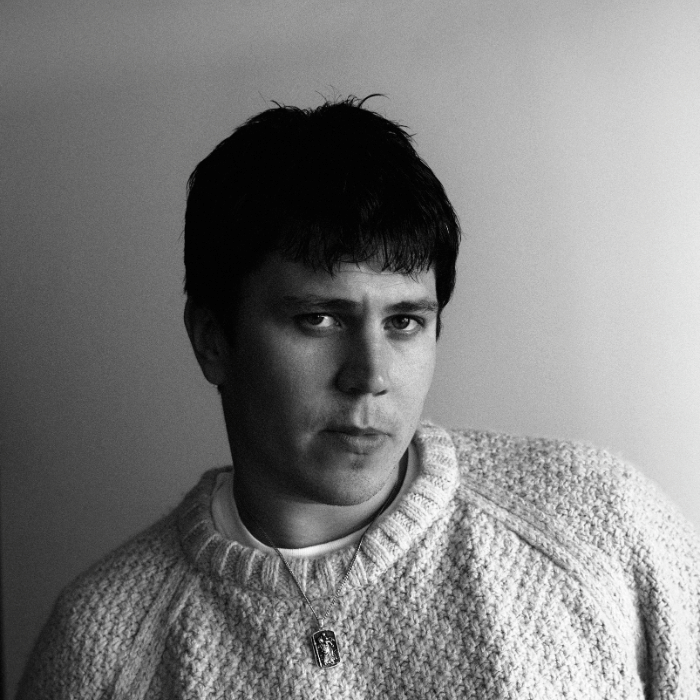
When you watch Aaron Rowe on stage, he anchors himself behind the mic, broad shouldered
and wide eyed whilst telling stories. Song histories, personal anecdotes or just random thoughts
and funny observations are blurted out with erratic but effortless charm. His smile is so sunny
and wide it feels permanent and his laugh is hoarse, warm and totally infectious. When he
speaks his eyes glisten, but when he sings, they close as his head lulls onto his shoulder and
tilts back. For Aaron, singing and playing guitar is not a choice, it’s an extension of himself – he
has to do it. You can tell as soon as he begins it offers him not only freedom, but focus.
It wasn’t always that easy, though. When he first started playing music as a teenager, Aaron
tried to keep it a secret. “Where I’m from, you can’t show people you’re soft, so playing music
and singing was just off the cards.” However, it got tricky once he started walking around the
area with a guitar strapped to his back. One day he was finally pulled over by “a few of the lads,
they asked me ‘you playing music then, Aaron? Play us a song;” And when he humbly refused?
“Play us a fucking song”. Reluctantly, he sang to them, sitting on a brick wall behind those tightly
closed eyes. When he opened them, instead of laughter he was met with acceptance. “All they
said was, ‘That was class,’ It was a really nice moment for me, and after that exact day I was
like fuck this, this is what I want to do, and this is what I’m going to do for the rest of my life”. He
decided then and there that he was going to be a musician.
Aaron grew up in Monkstown Farm, Dun Laoghaire on the southside of Dublin with his three
sisters and single mother. “It was rough. Do you know what I mean? But rough in the sense that
it was tough seeing her go through it. We never went without a hot meal but she went without
everything.” Because his mum wanted him and his sister to be educated in the irish language,
he ended up going to a different school to the boys in his area. He quickly began “living a double
life”, softening his accent and picking up middle class manners. “When I was in primary school I
just wanted to fit in, but when I got to Secondary I found that my strength was that I wasn’t like
the kids around me, and so I played up to it a lot. Once, someone in school called me a
scumbag and I said ‘grand, now i’m going to give you full scumbag!’”
So far, the story of Aaron Rowe looks like what fate feels like: paths crossing and stars aligning.
Almost exactly a year ago, Aaron was singing covers at his regular Saturday gig in The Dame
Tavern when one of his future managers would walk in and discover him playing. A few weeks
later, Lewis Capaldi would also stumble into Aaron’s usual Sunday sessions at Cassidy’s on a
stag do. Like fate, a few weeks after that, he would bump into Lewis again whilst performing at
an open mic in Nashville, where Lewis introduced him to his best friend, now Aaron’s manager,
who just so happened to have listened to his demos that very morning.
Far from an overnight success, after nearly thirteen years of gigging five days a week, his
moment finally came. Call it fate, call it what you will, a good story is the least you can expect
from a generational voice like Aaron. His own life experiences leading up to this moment means
there is an unmatched maturity and vulnerability to Aaron’s songwriting, Somehow, he can
balance the heart wrenching with the heartwarming, all the while holding open the door to us
into his very personal world. This dichotomy he often explores on upcoming releases lies not
only in its sometimes frank, sometimes devastating lyrics, but crucially in the old soul of Aaron’s
voice, where he wears his influences on his sleeve; from Sam Cooke to Nina Simone to Paulo
Nutini.
What separates Aaron from his contemporaries is the everlasting quality to his songs – it’s as
though his voice trips and falls seamlessly through a melody, forever wounding its listener. You
can see the mansion/ from the council estate,” sings Aaron in the opening line of his first single,
‘Hey Ma’. On the surface, it’s a song written to his Mum about missing home and living
vicariously through her whilst working over in England. However, through his colloquial and very
intentional way of lyric writing, Aaron can encapsulate an entire world in a single line. ‘And down
here no one’s special,/ And they’d kill if you tried,/ But they’d help you in a heartbeat,/ And if
they couldn’t stop you bleeding,/ They’d die there by your side.’ The sharp inhalation of breath
that cuts through the opening seconds of the song seems to warn us that what’s about to follow
is truly exceptional, because although grounded in a cold, casual reality, ‘Hey Ma’ feels
transcendental. It’s what you’d call a forever song; a song that will stand the test of time, and
Aaron doesn’t so much sing the words, as live them. As we climb the final moments of the song,
hundreds of years shatter through the vocal, turning it to gravel, and Aaron throws away the
melody in favour of mesmerising runs, so powerful and painful it is as if you can hear his heart
breaking.
A lot of the songs on the upcoming project are inspired by his home and the people Aaron grew
up with. Talking With You, for instance, is about his uncle Mick: “Mick has no kids and adopted
me, in a way. We used to drink cans of Guinness and watch the horses on TV.” When Aaron
had to start going over to England a lot, he felt guilty leaving Mick behind. “Shooting the bullshit/
watching the news/ picking a winner/ watching him lose… wish i was somewhere just talking
with you.” The Lane touches upon a similar subject, but holds even greater meaning for Aaron.
“It’s been a few years in the making, this song. When I used to go on the hop from school, I’d
end up at my da’s place with his eccentric friend, Terry. One day he went ‘I have a song name
for ya: Down Through The Lane’ and I was never sure what he meant by that. But then we
started talking about my dad and his own dad, and the geography of where they lived and how
we got to where we are today, and how you had to walk down this little lane off the main road to
get to the gaff…” A few years passed and still no song, even Terry himself passed away, but
Aaron always had that title in the back of his mind. It was only when he was up one night having
a few drinks with his Dad, that the inspiration for the song finally came. “When my grandad was
dying on his deathbed, my dad said he was holding his hand- imagine that, two hard men of that
generation holding hands- and even when he was finally unconscious the only thing he wanted
to say to his dad was I love you, and he couldn’t. He just didn’t know how to say it. And he never
got to say it.” However, Aaron is able to say it, and that’s the whole point. With the lyrical
dexterity of Damien Dempsey and the visceral melodic nuance of Damien Rice, Aaron’s
capacity for empathy within his songwriting is unparalleled, and he often becomes the perfect
voice for that which cannot always be expressed.
Over a month before the release of his first single, ‘Hey Ma,’ people were already sharing their
own versions online by piecing together the song through snippets that had surfaced on social
media. Something within just a few seconds of that song had broken through and touched
people. He’s played in pubs with Ed Sheeran, who is a fan, and supported David Gray at the
3arena without a single song out. Earlier on in the year he was invited to sing ‘The Parting
Glass’ with Dermot Kennedy in Boston in front of 20,000 people who hadn’t a clue who he was,
and yet the entire place erupted after he sang one line. Saying this, it doesn’t take long to
realise it’s not just his voice that has captured the hearts of so many people so early on in his
career – its Aaron. His ability to blend this kind of timeless songwriting – whether singing about
Monkstown, his ma or his uncle Mick – is truly part of what will make Aaron Rowe a touchstone
for his generation, and will ensure he’ll always be sat on that wall, eyes closed, straddling the
line between Ireland’s culturally rich past and trailblazing present.

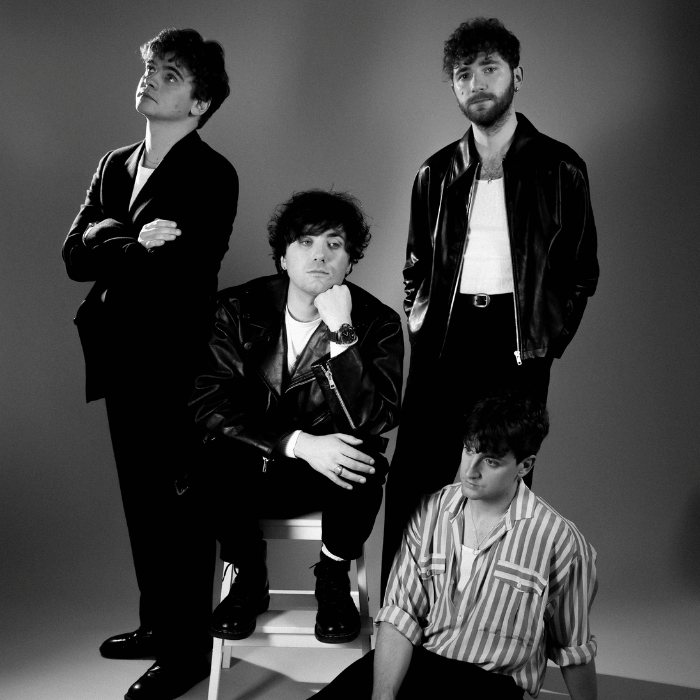
Holed up in a makeshift studio in rural County Clare, a calamitous first attempt at recording music gave life to an unexpectedly formative moment for Limerick band THEATRE. Despite falling in love with gigging in their hometown and beyond, it was clear that they weren’t ready for the studio. At first, the incident led to finger-pointing, doubt, and painful introspection. The session had rocked the confidence and unity of the still fledgling five-piece. Despite this, the moment paradoxically nudged THEATRE down a path they have since followed to uncharted territories of growing acclaim.
So much of what defines THEATRE stems from the mystery that has surrounded their quiet rise in the many months since that first studio session. Feeding on clamorous word of mouth and a series of increasingly coveted live shows, THEATRE had already found firm footing as one of Ireland’s most unique rising talents long before their return to the studio. Their first single, ‘The Fall’ (released on Echo through BMG) confirms what those who had already known THEATRE had been saying for years: this is something special.
The band had gained a reputation for something musicians shouldn’t necessarily be known for: silence. Their ever-growing confidence and refusal to seek mainstream success by force lended legitimacy to their limited self-promotion and online presence. Each gig brought with it a new tranche of followers patiently awaiting recorded tracks. The band had understood that they needed time to produce music that truly represented them – they were giving it exactly that. The unhurried recording of their debut EP, “Incarnate”, ushered in a new era for the group – a much-awaited lifting of the veil.
Sewing together an intricate blend of gothic, ethereal rock with folk and shoegaze, THEATRE’s sound has been slowly polished through a wave of ever-more established live shows, including support slots for DIIV, English Teacher, and Shame at a sold-out Kentish Town Forum. Elsewhere, the band joined Gurriers on their EU tour, headed Irish Music Week, and secured a stripped-back spot in Dublin’s famed Ruby Sessions.
There’s a palpable fluidity on display in THEATRE’s live performances. Carefully crafted interludes weave together sets with a feeling of a deeply considered curation. Haunting and emotive melodies combine with the powerful vocals and intensely earnest lyrics of lead singer, Maeve O’Shea, as the band blends genres with an intentional yet elastic ease. The end product is an understated yet timeless sound, showcasing a sense of comfortable unity between members from diverse musical backgrounds. Maeve’s stage presence is earthy, grounded yet haunting. She makes herself known but feels untouchable, and even in these early shows we can already see the front rows filling with young girls who just want to be near her, wide-eyed and cast under a spell. No doubt, we have a star in the making here.
However, make no mistake, this is very much a band, and we can sense the pack mentality when THEATRE are performing, they are tight and locked in, each perfectly contributing to this impenetrable wall of sound. This unique sound has been driven by THEATRE’s hard-wired sense of adaptability – something instilled in their work since the first recording session. The band have shown a willingness to be vulnerable and open to internal and external criticism. Members Maeve O’Shea, Oscar Halpin
, Sean Storan, Dara Gooney, and Gerry Sheil all hail from different backgrounds with distinct musical tastes. They made a point to never approach the writing room with a specific sound in mind. Over time, comfortable in the belief that there’s no need to rush, their sound took shape. A liberating lack of agenda infiltrated their music, leading to tracks that each individual member would never have considered making alone.
This openness extended beyond the confines of their original Limerick City practice room. On their eventual return to the studio, THEATRE piqued the interest of Grian Chatten and Carlos O’Connell of Fontaines DC, whose feedback helped the band uncover previously untapped layers of their own sound. As they found their footing in the studio, their openness while demoing unlocked new levels to their music. While working with producer David Noonan, of Irish shoegaze outfit Just Mustard, THEATRE were encouraged to embrace more vintage rock sounds. Later sessions with Alex Greaves – who produced “Incarnate” – unearthed a more contemporary approach previously undiscovered by the band. The group’s open-mindedness allowed THEATRE to marry these disparate worlds, doing justice to the songs they had started writing over two years before. The band had set out to create music that reflected their truest selves. By patiently molding together diverse perspectives and taking the time to look within, they had achieved exactly that.
Despite leaving Limerick in 2025, the band are quick to credit the city with helping them hone their sound. Since moving to Dublin, THEATRE wear their home town as a sort of invisible identity. Far from pandering to a booming cultural “green wave”, their attachment to Limerick instead rears its head in subtle ways. All of the songs in their debut EP were written in their Limerick practice room and carry memories of their time there. The group had allowed the city to shape them, often through dark times, and that experience bleeds through in their music. Just as certain tracks reflect on the people who left a mark on their lives, the EP as a whole serves as an understated ode to the imprint Limerick made on them.
In the years since they first set foot in a recording studio, THEATRE have gradually sharpened their sound and found new levels of self-assuredness along the way. By eventually releasing music to the public, the band are entering a new phase. As the fog begins to lift, revealing more about who THEATRE really are, it will become clear why it has taken time to reach this point.

KK Lewis is a Dublin singer-songwriter blending soul, R&B and pop, and one of the most
exciting Irish artists to watch right now.
Her breakout single Pigeon Man went viral with over 3 million views and 26k+ user-generated
videos, while follow-up One Step Behind landed as RTE Radio 1’s Track of the Week and
earned praise from Hot Press, District, Earmilk and Nialler9.
New music recorded with producer Joseph Rodgers (Beabadoobee, Rina Sawayama), drawing
comparisons to Olivia Dean and RAYE, is due in the coming months.
Catch her live before the world catches on.


Stay tuned for more information.
NYF Dublin is part of the Winter in Dublin Programme, an initiative of Fáilte Ireland.


